01
Symptoms
What failed.
Every year, millions of electronic devices become waste because they are difficult, expensive or inefficient to repair.
EDIO is building the technology infrastructure that helps the people who repair those devices make better decisions, recover more devices and extend electronic product lifecycles.
How EDIO started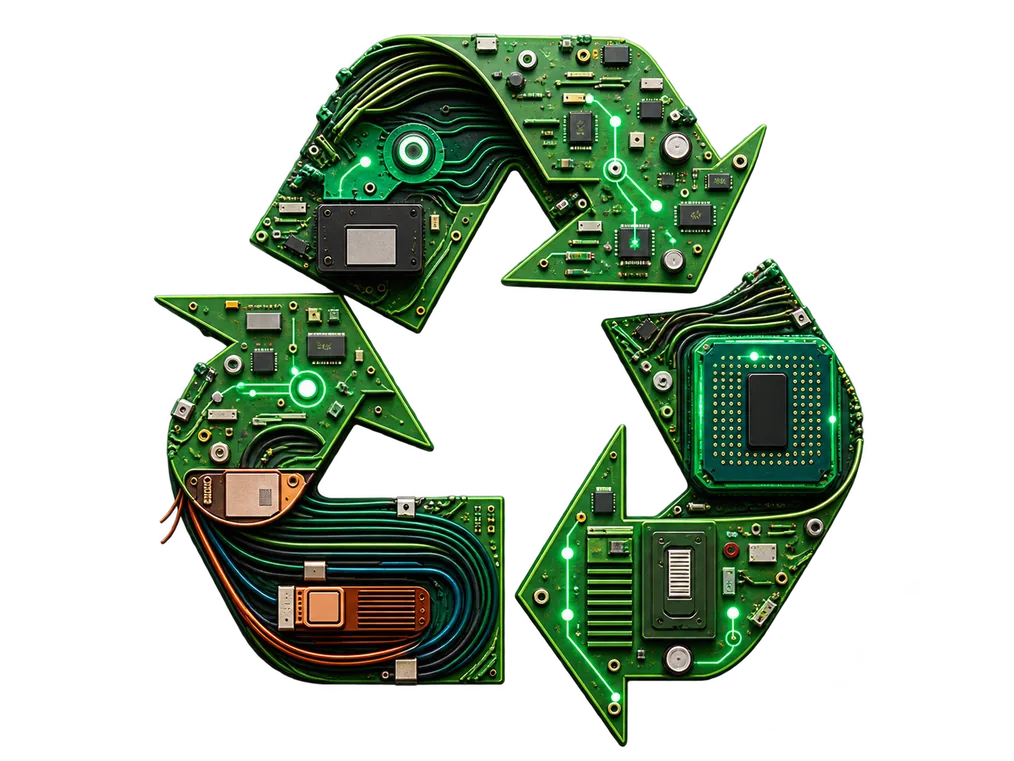
A device reaches waste long before it reaches the end of its useful life — usually at the point where diagnosis becomes too hard.
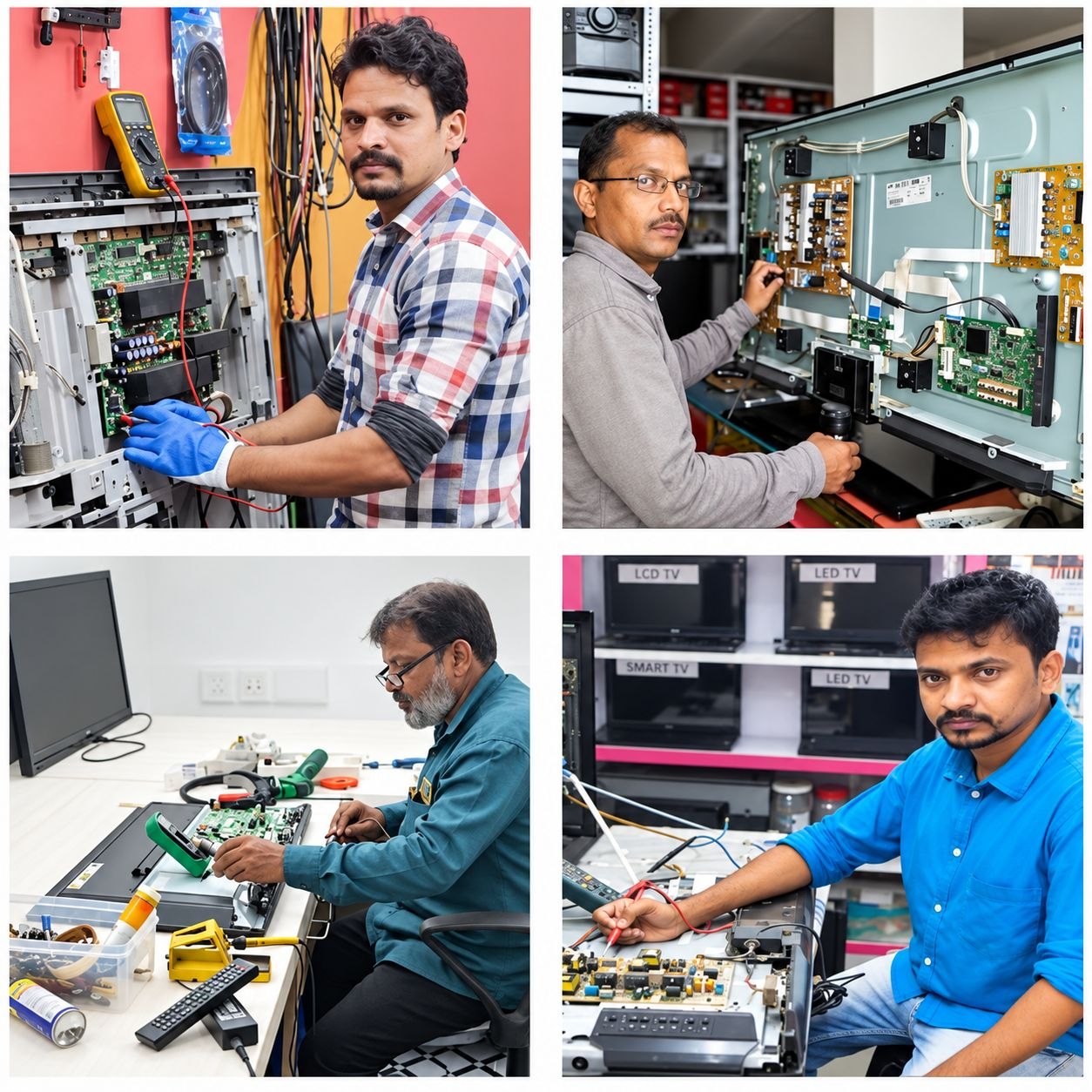
Where the chain breaks. When diagnosis stalls, the device does not wait — even when the fault is small, local and fixable. EDIO works on that diagnosis step.
Four layers, built in order. Each one only works because the layer beneath it exists.
Select a layer to see what sits inside it. Data moves upward: hardware produces evidence, evidence becomes structure, structure becomes assistance.
Flagship hardware
Explore SmartClone to see its hardware, interfaces and the repair modes it runs on its own — no computer at the bench.
Hover a marker to see what it does. Select the screen for the full mode list.
Repair more. Waste less. Build smarter.
Technology should not only create new products. It should also help us repair, recover and extend the life of the products we already have.
PHYSICAL AI / REPAIR TECHNOLOGY
EDIO is building repair hardware, repair data and repair intelligence for the physical world.
01 / Repair
Every repair contains useful signals.
What failed.
What the device shows.
What was tried.
What solved it.
02 / Repair data
Capture the path from fault to verified outcome.
03 / Repair intelligence
Patterns from past repairs can improve the next decision.
Find recurring fault patterns.
Rank probable causes.
Suggest the next useful action.
Improve from the result.
04 / Physical AI
Perceive what is happening. Decide what to do. Learn from the outcome.
Understand the device and its condition.
Interpret symptoms and evidence.
Choose the next repair action.
Verify the outcome and improve.
LONG-TERM DIRECTION — BUILT ON REAL REPAIR DATA AND REPAIR INTELLIGENCE.
05 / Direction
Tools built for real repair workflows.
Structured repair knowledge and diagnostic reasoning.
Systems that can understand and act on physical repair problems.
From the repair bench to physical intelligence.
SMARTCLONE / SC—1
An advanced standalone motherboard programming, diagnostic and recovery tool designed for electronics repair professionals.
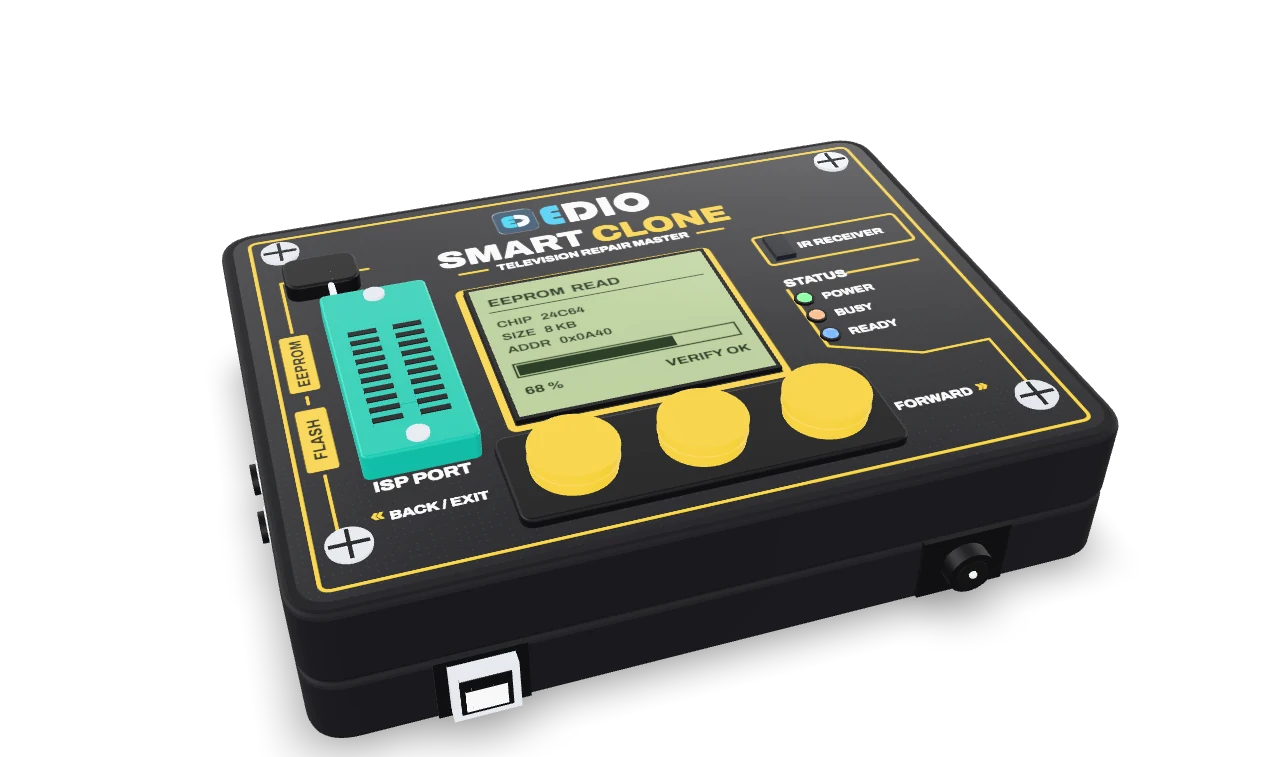
SmartClone was designed from the bench outward. It runs standalone, so it works in a service centre with no spare laptop, in a field visit, or on a crowded workshop table.
It covers the operations that decide whether a board is recoverable: talking to the system, reading and keeping its memory, editing contents where needed, writing back, and verifying the result.
Auto-detects SPI flash or I²C EEPROM, then fixes panel division (1↔2 panel), JEIDA/VESA LVDS bit mapping and image mirror. Single byte, written and verified.
Auto-baud serial probe that parses the boot stream live and tracks six boot stages on the device LCD. Flags boot loops and kernel panics, and recommends the next action.
Reads the source panel ID EEPROM, archives it to SD, then writes it to the replacement chip. Auto-detects address, size, addressing mode and bank count.
Edits VGH, VGL, VCOM, AVDD and other voltage registers across 33 supported PMIC chips — shown in millivolts, with range checks before any write.
General-purpose read, write, verify and erase for 24Cxx EEPROMs and 25xx SPI flash, with SD archive and restore.
Service-mode codes for a range of TV brands, plus receive and decode (NEC, Sony SIRC, Samsung), learn and replay, brand database and auto-match.
Browses the SD card, shows storage statistics and opens any .bin in an on-device hex viewer.
Connected over USB, the tool enumerates as a virtual COM port so a PC application can drive the same programming operations.
Modes above are implemented in shipping firmware. Coverage grows through updates.
The device
The ISP programming socket, the display, the infrared receiver, the status indicators and the three control buttons — from any angle.
Eight stages, in order. Step through them to see what the tool is doing at each point.
Rows marked pending are not yet published. They are left blank rather than estimated.
| Microcontroller | STM32F401RET6, ARM Cortex-M4 at 84 MHz |
|---|---|
| Memory | 512 KB flash, 96 KB SRAM |
| Display | 160 × 128 RGB565, SPI |
| Controls | Three buttons — up, OK, down, each with short and hold actions |
| Indicators | Two activity LEDs |
| Storage | SD card, FAT32 |
| Serial probe | USART, 9,600 to 921,600 bps, auto-baud scan |
| I²C bus | EEPROM and PMIC access |
| SPI | External flash, 25xx series |
| Infrared | Receive and transmit, 38 kHz carrier |
| Host link | USB 2.0 full speed, CDC virtual COM port |
| Operating modes | Seven, plus USB-CDC and one-click update |
|---|---|
| EEPROM support | 24C01 to 24C512, with auto-detection of size, addressing mode and banks |
| SPI flash | 25xx series, identified by JEDEC ID |
| PMIC database | 33 chips across Chipone, Sitronix, Richtek, Silergy and Texas Instruments |
| Voltage editing | VGH, VGHF, VGL, VGL2, AVDD, VCOM — entered in millivolts, range-checked |
| IR protocols decoded | NEC, Sony SIRC (12, 15 and 20-bit), Samsung |
| Internal buffer | 16 KB, with SD streaming in 16 KB chunks for larger devices |
| On-device editing | Hex viewer and 8 × 8 hex grid editor |
| Firmware update | One-click over USB, SD card or mass storage |
| Verification | Read-back comparison after every write |
Two columns, deliberately separated: what SmartClone does today, and what is planned. Nothing is promised in the wrong column.
These items are roadmap. They are not part of what ships today.
Sustainability
When an electronic device is repaired instead of discarded, the useful life of the product can be extended and the need for premature replacement can potentially be reduced.
A repair avoids the carbon it would have taken to manufacture a replacement. This model estimates that avoided carbon from three numbers: how many units you repaired, what each one costs to make, and how many would otherwise have been thrown away.
CO₂ AVOIDED
How this works: CO₂ avoided = units repaired × carbon to manufacture one unit × the share that would otherwise have been replaced. The manufacturing figures are rough, publicly reported averages for each product category (mainly from lifecycle assessments and manufacturer disclosures) — real devices vary a lot by model, size and factory, so treat every output here as a directional estimate, not an audited or certified figure. Replace the "carbon to manufacture one unit" field with your own product's number whenever you have one.
Everyday comparisons use rounded, widely cited conversion factors (≈0.19 kg CO₂e per km driven in an average petrol car; ≈25 kg CO₂e absorbed per year by a young tree) purely to make the number tangible — they are not part of the core calculation.
EDIO's work aligns with the objectives of four UN Sustainable Development Goals. Alignment is not endorsement: EDIO has no UN partnership, affiliation or certification.
Creating technology-enabled opportunities for skilled repair professionals.
Building advanced repair infrastructure and electronics technology.
Supporting longer product lifecycles and circular use of electronics.
Repair and product-life extension can contribute to reducing resource demand associated with premature replacement.
Goal titles are as published by the United Nations. No statistics from external publishers are cited on this page yet; when they are, each will appear here with publisher, year and link.
EDIO's sustainability view includes people, not only waste. Every advanced repair tool can increase the capability of the person using it.
POTENTIAL IMPACT MODEL
Technicians equipped × repair capability × devices serviced
A framing, not a measurement. EDIO will publish figures against this model only when technicians, capability and volumes can be verified.
Published only where EDIO holds evidence: named deployments, counted technicians, dated events. Until then, this space stays empty on purpose.
Modelled or projected outcomes, always labelled, always with assumptions attached, never counted alongside verified figures.
EDIO Insights
Technical articles, case studies and thinking on repair, data and the circular electronics economy.
About EDIO
EDIO did not begin with a market study. It began with boards on a bench, and with technicians who could see exactly what was wrong with a device but not always get to it.
Spending time in that environment makes one thing obvious very quickly: the hard part is rarely the soldering. The hard part is knowing what to trust. Which measurement matters. Whether the board is dead or just holding the wrong bytes. Whether an hour of investigation will end in a repair or in a written-off unit.
That is a technology problem, and it had not been treated like one. So we started building tools for it — starting with the operations that most often decide whether a board can be recovered, and putting them in something that works standalone, in the real conditions of a workshop.
SmartClone came out of that. Then a second realisation: every repair that tool helps complete produces knowledge, and almost all of it evaporates. Structuring that knowledge is the longer, harder and more valuable project, and it is where EDIO is heading.
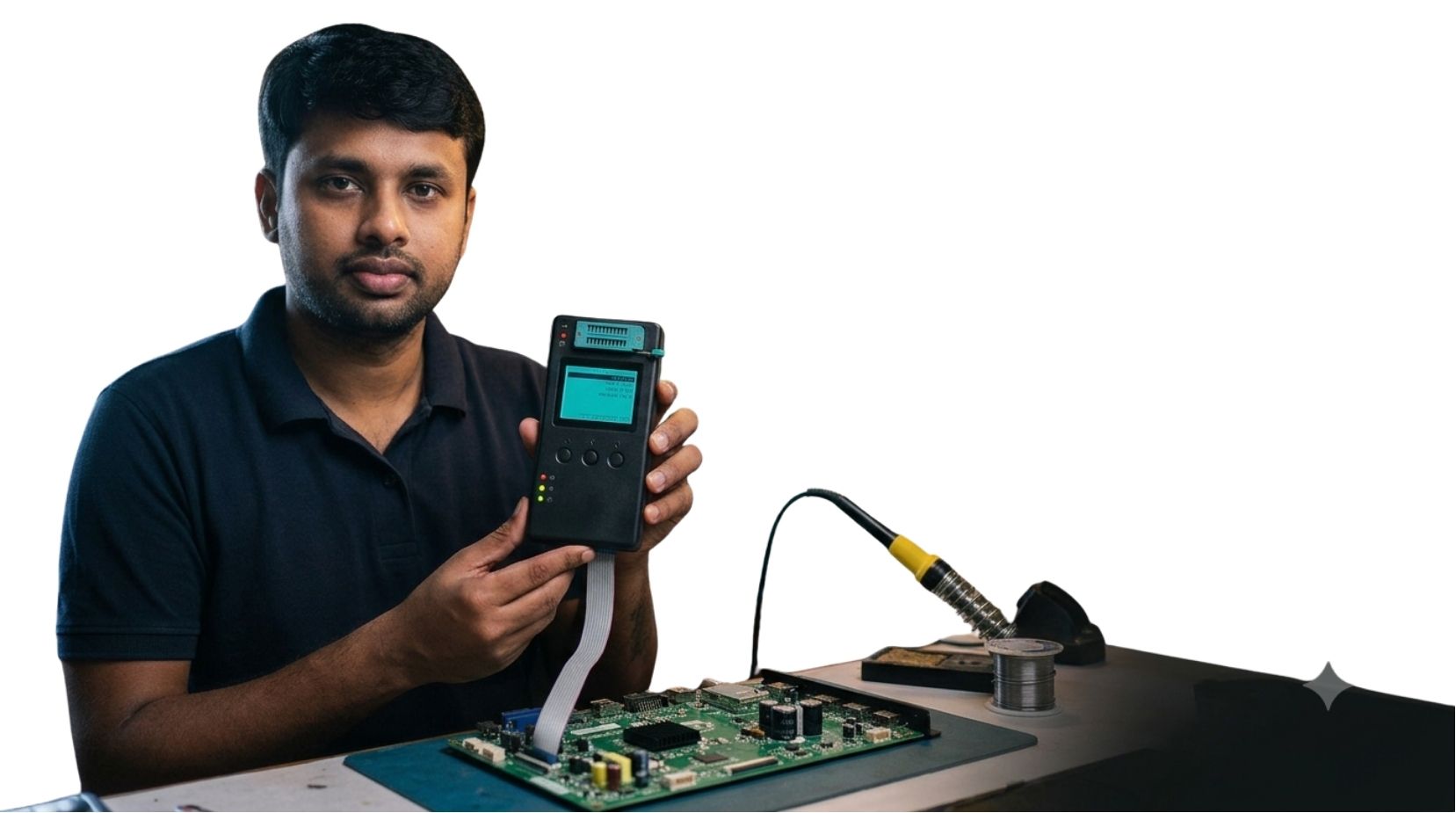
Seven phases, from time at the repair bench to a repair intelligence layer that works across markets.
NOW AT PHASE 4 OF 7 — SMARTCLONE IS SHIPPING
Time at the bench, with real failures.
Diagnosis, not dexterity, is the bottleneck.
Building an instrument for that bottleneck.
Standalone programming, diagnosis, recovery.
Capturing what each repair teaches.
Turning records into assistance.
The same layer, across markets.
Global repair ecosystem
The same faults appear in Chennai, Lagos, São Paulo and Warsaw. So do the same gaps in tooling and information.
Where EDIO's repair ecosystem is confirmed today. Select a place to find it on the map.
Markers appear only for locations EDIO can confirm. An empty region means no confirmed presence yet, not a gap in the map. Map data: Natural Earth.

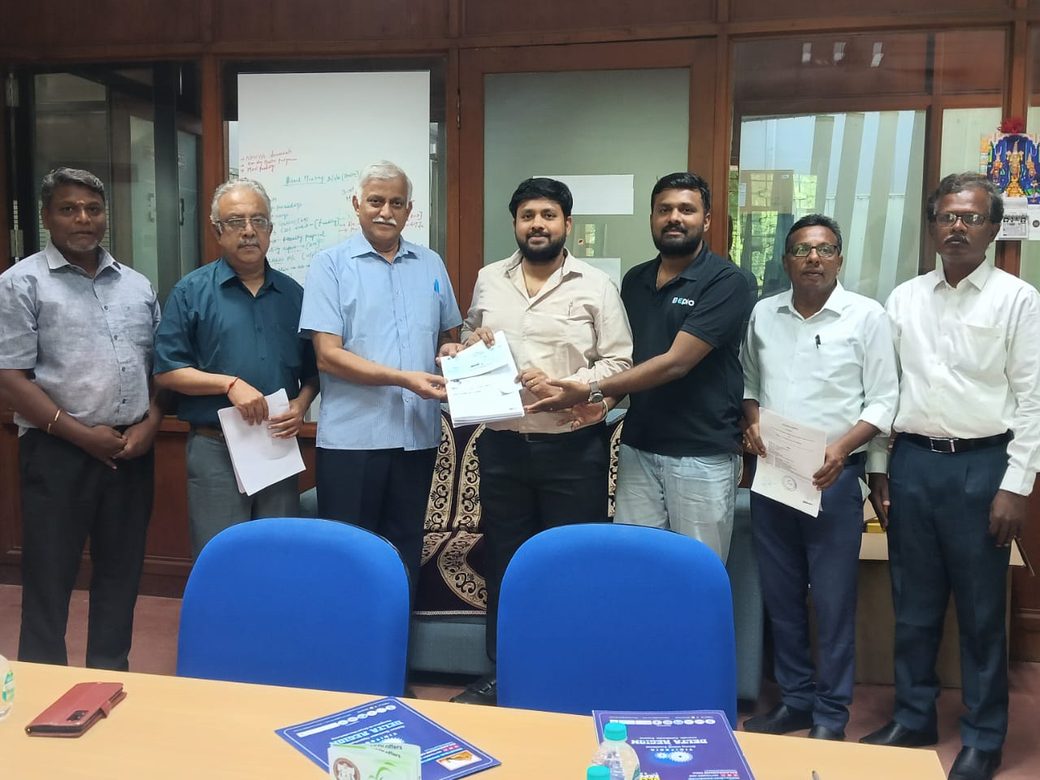
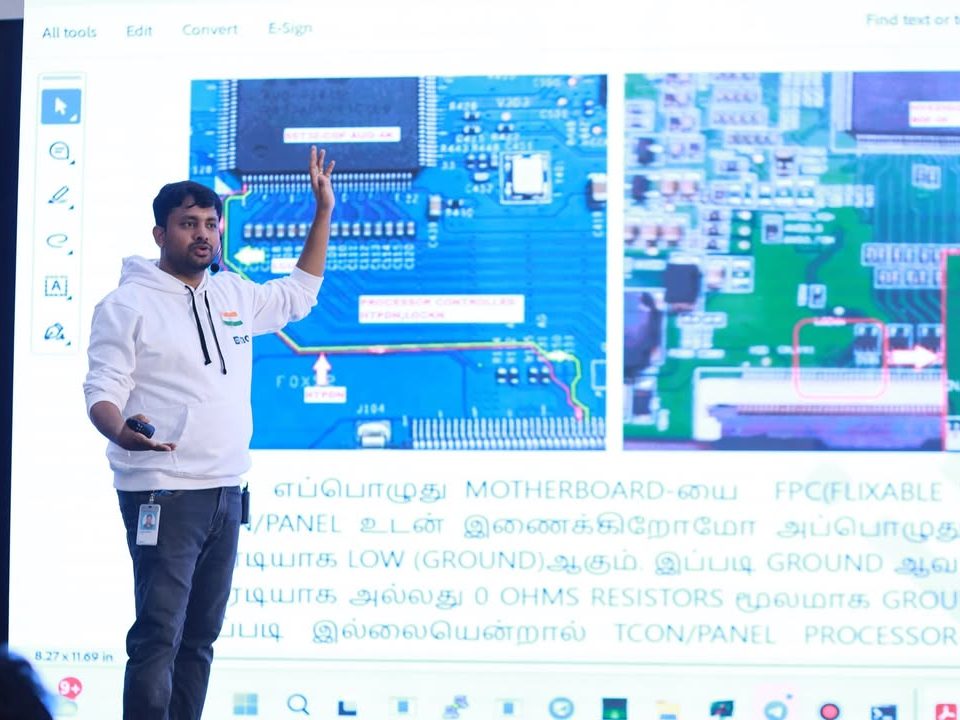
SUPPORTED BY
Contact and partnerships
Tell us which of these you are, and the form will ask only what is relevant.
EDIO DEVICE FILES
Download the remote database, Android updater and PC installer for EDIO hardware.
Remote database file for EDIO device use.
Device firmware image for flashing.
Android updater package for SmartClone.
Windows installer for EDIO SmartClone.
Firmware images are not available for public download. For firmware or flashing support, message the EDIO team on WhatsApp.
Talk to EDIO
Ask for a demo, pricing or dealership details. The EDIO team is on WhatsApp.