 ™
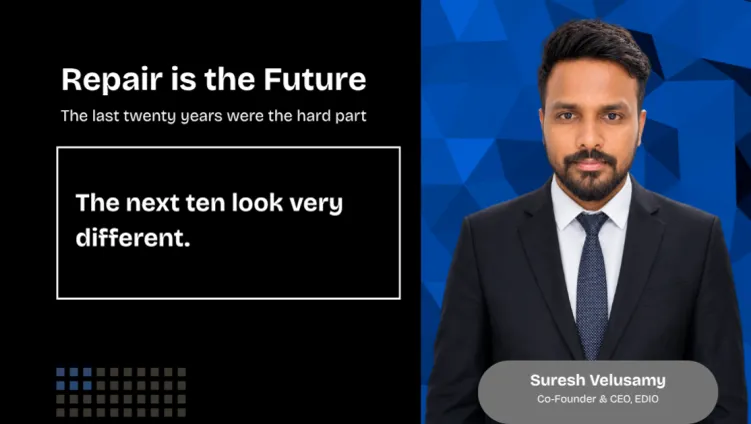
Suresh Velusamy, Co-Founder and CEO of EDIO, says the growth of artificial intelligence could make repair a central part of the electronics industry rather than an afterthought.
For two decades, he says, electronics followed a simple pattern of buy, use and replace. A new television could cost less than a replacement panel, and a new phone less than repairing a major board, so repair was pushed to the margins.
Devices worth keeping
AI is creating heavy demand for advanced chips and memory. As devices pack in more processors, memory, firmware, sensors and specialised components, they become more valuable, and replacing the whole product after a relatively small failure becomes harder to justify.
“Imagine a ₹60,000 device. If the failure can be diagnosed and repaired for ₹6,000–₹10,000, the customer’s question changes from ‘Should I buy a new one?’ to ‘Why would I replace the whole thing?’”
Repair intelligence
Velusamy describes the next stage of repair as a technician working with repair data, AI and diagnostic hardware. The technician enters the model, board, symptom and readings, and the system suggests the likely failure, the test point, the expected reading, the probable component and a repair procedure, along with how often that repair has succeeded before.
Every repair adds to that knowledge: each failed board, measurement, replaced component and outcome feeds a repair data engine. Better diagnosis makes more products economically repairable, which brings more repairs and more data.
“AI may not kill the repair industry. It may give the repair industry its biggest technology upgrade yet.”